


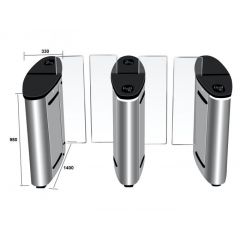
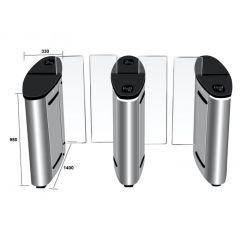


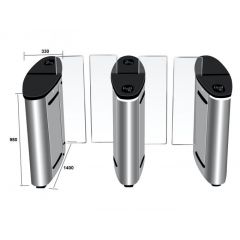
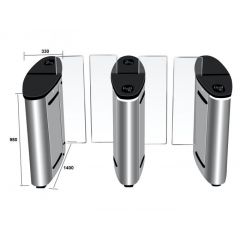


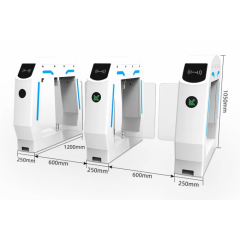
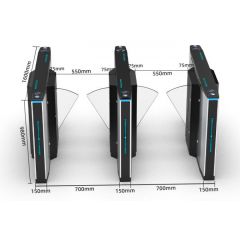


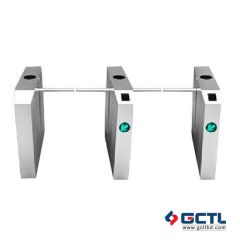
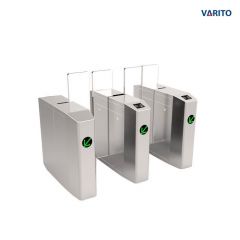


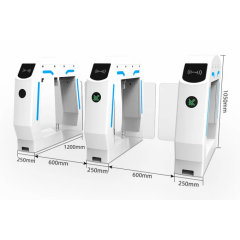


Turnstile Gate in Bangladesh for Office, Factory and Building Entrance Control
Turnstile Gate in Bangladesh is commonly used to control pedestrian entry and exit in secured premises. It helps organizations manage who can enter, when they can enter and how entry records are maintained. This is useful for offices, factories, garments, schools, hospitals, banks, residential buildings, commercial towers and government facilities where unauthorized movement needs to be controlled.
For office buildings, turnstile gates can improve lobby security and employee access management. For factories and garments, they can help manage worker entry, attendance and restricted zone access. For schools and universities, turnstiles can support student access control. For shopping malls and public buildings, turnstiles can help manage visitor flow and crowd movement.
A complete entrance control system may include turnstile gate, access control reader, RFID card reader, fingerprint reader, face recognition terminal, QR code reader, time attendance software, visitor management system, CCTV monitoring, emergency access mode and installation support.
Turnstile Gate Price in Bangladesh by Type and Project Size
Turnstile Gate Price in Bangladesh commonly starts from ৳50,000 to ৳10,00,000 depending on gate type, system design, lane quantity, access control integration, installation area, motor quality, body material, software requirement and project size. A tripod turnstile gate, flap barrier gate, swing barrier gate, full height turnstile, speed gate or car parking boom barrier may require different setup based on pedestrian flow, vehicle access, RFID card, fingerprint, face recognition, QR code, time attendance or visitor management integration. Get the best turnstile gate and boom barrier price with professional installation support from Germany Computer & Telecom Ltd. (GCTL), a trusted importer, distributor and supplier of entrance security solutions in Bangladesh.
For a small office or school, price may depend on a single lane turnstile with RFID card access or fingerprint access. For a corporate building, hospital, shopping mall or bank, price may depend on flap barrier, swing barrier, speed gate, face recognition integration and visitor management software. For factories, garments and industrial sites, price may depend on tripod turnstile, full height turnstile, boom barrier, access log reporting, time attendance integration and durable outdoor installation.
The best way to get the latest Turnstile Gate Price in Bangladesh is to request a quotation based on your entrance size, number of users, lane quantity, access control requirement, installation scope and integration plan.
Main Types of Turnstile Gate and Barrier Solutions
Different turnstile gates are designed for different entrance control needs. The right solution depends on whether the project needs basic pedestrian control, premium lobby access, wider passage, high-security perimeter control, fast traffic flow or vehicle entrance management.
Tripod Turnstile Gate
A Tripod Turnstile Gate is one of the most common pedestrian access control solutions for offices, factories, garments, schools, gyms, commercial buildings and industrial entry points. It is compact, practical and suitable for controlled entry where one person should pass at a time.
Tripod turnstiles can be integrated with RFID card readers, fingerprint access control, face recognition terminals and time attendance systems. This makes them useful for employee entry control, attendance tracking and restricted access management.
Flap Barrier Gate
A Flap Barrier Gate is suitable for modern office lobbies, corporate buildings, banks, shopping malls, metro-style entrances and premium commercial facilities. It provides smooth pedestrian access control with a professional entrance appearance.
Flap barrier gates are often used where both security and design matter. They can work with access control systems, QR code readers, RFID cards, fingerprint devices, face recognition terminals and visitor management software.
Swing Barrier Gate
A Swing Barrier Gate is suitable for locations where wider passage is required. It is useful for offices, hospitals, schools, commercial buildings, wheelchair access lanes, VIP entry points and areas where users may carry bags or equipment.
Swing barriers can be combined with other turnstile gates to create a complete entrance control system. For example, a corporate building may use flap barriers for regular entry and swing barriers for wider access or visitor movement.
Full Height Turnstile Gate
A Full Height Turnstile Gate is designed for high-security access control. It is commonly used in factories, industrial zones, warehouses, stadiums, construction sites, restricted facilities and outdoor perimeter entry points.
Full height turnstiles provide stronger physical restriction than waist-height turnstiles. They are suitable where unauthorized entry, tailgating or bypassing access control must be reduced more effectively.
Speed Gate and Optical Turnstile
A Speed Turnstile Gate is suitable for high-traffic corporate lobbies, commercial buildings, banks, hotels, airports, institutions and premium entrance areas. It offers fast pedestrian movement with access control integration.
An Optical Turnstile Gate is often used where smooth design, fast access and smart detection are important. Speed gates and optical turnstiles can support RFID, QR code, face recognition, visitor access and time attendance integration depending on project design.
Sliding Turnstile Gate
A Sliding Turnstile Gate is suitable for premium pedestrian access control where a modern look and smooth movement are required. It is commonly used in corporate offices, banks, hotels, commercial towers and high-end building entrances.
Sliding turnstiles are useful for projects where entrance appearance, passage speed and controlled access are equally important. They can be integrated with access control and visitor management systems.
Car Parking Boom Barrier Gate
A Car Parking Boom Barrier Gate is used for vehicle entrance control in parking areas, factories, residential buildings, commercial complexes, office premises, hospitals and restricted vehicle zones.
Boom barrier gates can work with RFID tags, remote control, loop detectors, access control systems, parking management software and ANPR camera systems. They are useful when vehicle entry and exit need to be controlled and recorded.
Turnstile Gate with Access Control and Time Attendance Integration
A Turnstile Gate becomes more powerful when it is connected with access control and attendance systems. Instead of only blocking or allowing entry, an integrated turnstile system can identify users, record entry time, manage employee attendance and support visitor access control.
GCTL Security can integrate turnstile gates with Access Control and Time Attendance System, Fingerprint Access Control System, Facial Recognition Access Control System and Time Attendance Management Software depending on project requirement.
Common integration options include:
- RFID card-based turnstile access
- Fingerprint turnstile access
- Face recognition turnstile access
- QR code turnstile access
- Time attendance report integration
- Visitor management software integration
- Access log and entry-exit report
- Multi-lane entrance control
- Emergency access mode
- CCTV monitoring integration
For factories and garments, this integration can help manage worker movement and attendance. For offices and corporate buildings, it can improve employee access control and visitor management. For public facilities and commercial buildings, it can help organize pedestrian flow and security monitoring.
Which Turnstile Gate Is Right for Your Use Case
The right turnstile gate depends on entrance type, user volume, security level, design requirement, passage width, access control method and budget. A small office may need a tripod turnstile, while a premium corporate lobby may need flap barrier or speed gate. A factory may need tripod turnstile, full height turnstile and boom barrier together.
Turnstile Gate for Office and Corporate Building
Offices and corporate buildings often need entrance control for employees, visitors and restricted areas. Flap barrier gates, speed gates, swing barriers and tripod turnstiles can be selected depending on lobby design, daily user flow and access control requirements.
Turnstile Gate for Factory and Garments
Factories and garments need reliable entry control for workers, staff, visitors and restricted production areas. Tripod turnstile gates and full height turnstile gates are practical for employee movement control and time attendance integration.
Turnstile Gate for School, College and University
Schools, colleges and universities can use turnstile gates to manage student entry, staff entry and visitor movement. RFID card access, fingerprint access or face recognition can be used depending on campus policy and security requirements.
Turnstile Gate for Hospital and Healthcare Facility
Hospitals need organized access control for staff areas, visitor zones, emergency areas and restricted departments. Swing barrier gates and flap barrier gates are useful where smooth movement and wider passage may be required.
Turnstile Gate for Bank and Financial Institution
Banks and financial institutions need strong entrance control, visitor management and staff access monitoring. Speed gates, flap barriers, swing barriers and face recognition access control can help improve security in sensitive areas.
Turnstile Gate for Parking and Vehicle Entrance
Parking areas, factories, apartments and commercial buildings may need boom barrier gates for vehicle entry and exit control. Boom barriers can be integrated with access control, RFID tags, remote control, loop detectors, ANPR cameras and vehicle control systems.
Turnstile Gate Brand and Technology Comparison
Different turnstile gate technologies are suitable for different project types. The best choice depends on security level, traffic flow, installation environment, access control requirement, body material, lane planning and after-sales support.
| Brand / System Type | Key Strengths | Best For | Important Consideration |
|---|---|---|---|
| VARITO Turnstile Gate | Professional entrance control, multiple turnstile options and access control integration support | Offices, factories, commercial buildings and entrance security projects | Model selection should match user flow, lane size and access control requirement |
| Tripod Turnstile Technology | Compact design, one-person passage control and practical cost structure | Offices, factories, gyms, schools and garments | Not ideal where wider passage or premium lobby design is required |
| Flap Barrier Technology | Smooth passage, modern appearance and access control integration | Corporate lobbies, banks, malls and premium buildings | Sensor quality, motor reliability and lane width should be checked |
| Swing Barrier Technology | Wider passage and flexible access control | Hospitals, offices, VIP lanes and accessible entrances | Passage width and barrier movement area should be planned properly |
| Full Height Turnstile Technology | Stronger physical restriction and high-security access control | Factories, warehouses, stadiums and restricted zones | Installation space and emergency exit planning are important |
| Speed Gate and Optical Turnstile Technology | Fast movement, premium appearance and smart access control | Corporate offices, hotels, banks and high-traffic lobbies | Sensor accuracy, passage speed and access integration should be checked |
| Boom Barrier Technology | Vehicle entrance control and parking access management | Parking areas, factories, apartments and commercial gates | Arm length, duty cycle, safety sensor and vehicle flow must be planned |
Things to Consider Before Buying a Turnstile Gate in Bangladesh
Before buying a Turnstile Gate in Bangladesh, check your real entrance control requirement instead of choosing only by product price. A successful turnstile project depends on the right gate type, lane design, access control integration, software compatibility, installation quality and after-sales support.
Important buying factors include:
- Office, factory, school, hospital, bank, apartment or commercial building requirement
- Pedestrian turnstile or vehicle boom barrier requirement
- Tripod, flap, swing, speed, optical, sliding or full height turnstile type
- Number of lanes and daily user flow
- Passage width and accessibility requirement
- RFID, fingerprint, face recognition or QR code reader support
- Time attendance and access log report requirement
- Visitor management software integration
- Indoor or outdoor installation condition
- Stainless steel body and durability requirement
- Emergency drop arm or emergency access mode
- Anti-tailgating and direction indicator support
- CCTV, access control and fire alarm integration
- Installation, commissioning, maintenance and spare parts support
For larger projects, turnstile gates should be planned after site assessment. Entrance width, power point, network connection, floor condition, user flow, emergency exit route and security workflow should be checked before final product selection.
Tripod Turnstile vs Flap Barrier vs Swing Barrier vs Full Height Turnstile
Tripod turnstile, flap barrier, swing barrier and full height turnstile are all used for entrance control, but each one is suitable for a different purpose.
| Comparison Point | Tripod Turnstile | Flap Barrier | Swing Barrier | Full Height Turnstile |
|---|---|---|---|---|
| Main Purpose | Basic pedestrian access control | Fast and modern lobby access | Wider passage and flexible access | High-security physical entrance control |
| Best Use | Offices, factories, schools, gyms and garments | Corporate buildings, banks, malls and premium lobbies | Hospitals, offices, VIP lanes and accessible entrances | Factories, warehouses, stadiums and restricted areas |
| Security Level | Medium | Medium to high | Medium | High |
| Passage Style | Rotating tripod arm | Retractable flap barrier | Swinging barrier panel | Full height rotating structure |
| Appearance | Practical and compact | Modern and professional | Clean and flexible | Strong and industrial |
| Access Integration | RFID, fingerprint, face recognition and attendance | RFID, QR, face recognition and visitor management | RFID, QR, face recognition and wider access | RFID, biometric and high-security access |
| Best For Budget | Budget-friendly projects | Premium building entrance | Wider access requirement | High-security perimeter control |
For small offices, schools and factories, tripod turnstile gates are often practical. For premium offices and corporate lobbies, flap barriers or speed gates may be better. For wider passage, swing barriers are useful. For high-security industrial or restricted areas, full height turnstiles are more suitable.
Complete Entrance Security Integration with CCTV, Access Control and Visitor Management
Turnstile Gate and Boom Barrier systems work best when they are part of a complete entrance security plan. Depending on the project, they can be integrated with CCTV, access control, face recognition, fingerprint devices, QR code readers, visitor management software, time attendance software, fire alarm and vehicle control systems.
A corporate office may need turnstile gates with face recognition access and visitor management. A factory may need tripod turnstiles with time attendance and boom barriers for vehicle entry. A bank may need speed gates, CCTV monitoring and access control. A commercial building may need flap barriers, swing barriers, visitor pass management and centralized security monitoring.
For complete entrance security planning, GCTL Security can connect turnstile and boom barrier projects with CCTV Camera, Entrance Security Solutions, Vehicle Control System, Smart Automation Solution and Intelligent Video Analytics depending on project requirement.
Why Choose GCTL Security for Turnstile Gate and Boom Barrier in Bangladesh
GCTL Security provides security and automation products in the Bangladesh market with a focus on practical solution planning, professional product selection and after-sales support. We understand that every office, factory, building and entrance has different security requirements, so we help customers choose the right Turnstile Gate and Boom Barrier solution based on actual use case, not only product name or price.
GCTL Security supports you with:
- Turnstile Gate supply in Bangladesh
- Tripod Turnstile Gate solution planning
- Flap Barrier Gate and Swing Barrier Gate consultation
- Full Height Turnstile Gate and Speed Gate selection support
- Optical Turnstile and Sliding Turnstile guidance
- Car Parking Boom Barrier Gate solution support
- Access control and time attendance integration
- RFID, fingerprint, face recognition and QR code access planning
- CCTV, visitor management and vehicle control integration support
- Project quotation, installation guidance and after-sales service consultation
Buy Turnstile Gate in Bangladesh from GCTL Security
If you are looking for the latest Turnstile Gate Price in Bangladesh, GCTL Security can help you compare the right turnstile type, lane design, access control method, software integration, installation scope and budget. Whether you need a Tripod Turnstile Gate for a factory, a Flap Barrier Gate for a corporate office, a Swing Barrier Gate for wider access, a Full Height Turnstile Gate for high security, a Speed Gate for a premium lobby, or a Car Parking Boom Barrier Gate for vehicle entry, our team can guide you with the right solution.
Contact GCTL Security today to get the latest price, product recommendation and project quotation for Turnstile Gate and Boom Barrier solutions in Bangladesh.
Frequently Asked Questions About Turnstile Gate
1. What is the price of Turnstile Gate in Bangladesh?
The price of Turnstile Gate in Bangladesh depends on gate type, brand, lane quantity, body material, access control integration, software requirement, installation location and project scope. Contact GCTL Security for the latest project-wise quotation.
2. What is a Turnstile Gate?
A Turnstile Gate is an entrance control device that allows controlled pedestrian movement. It can help restrict unauthorized entry and manage access using RFID card, fingerprint, face recognition, QR code or other verification methods.
3. What is the difference between Tripod Turnstile and Flap Barrier?
A Tripod Turnstile uses a rotating three-arm mechanism and is practical for offices, factories, schools and gyms. A Flap Barrier uses retractable flaps and is more suitable for modern corporate lobbies, banks, shopping malls and premium entrance areas.
4. Which turnstile gate is best for office entrance?
For office entrance, tripod turnstile, flap barrier, swing barrier or speed gate can be used depending on lobby design, daily user flow, access control requirement and budget.
5. Which turnstile gate is best for factory or garments?
For factories and garments, tripod turnstile gates and full height turnstile gates are often practical because they can help manage worker entry, restricted area access and time attendance integration.
6. Can Turnstile Gate integrate with access control system?
Yes, Turnstile Gate can be integrated with access control systems such as RFID card reader, fingerprint reader, face recognition terminal and QR code reader depending on project requirement.
7. Can Turnstile Gate be used for time attendance?
Yes, Turnstile Gate can be connected with time attendance systems to record employee entry and exit data. This is useful for offices, factories, garments, schools and commercial buildings.
8. What is a Full Height Turnstile Gate?
A Full Height Turnstile Gate is a high-security entrance control system with a full-height rotating structure. It is suitable for factories, warehouses, stadiums, restricted areas and industrial sites where stronger physical access control is required.
9. What is a Boom Barrier Gate?
A Boom Barrier Gate is a vehicle entrance control device used for parking areas, factories, apartments, commercial buildings and restricted vehicle entry points. It can be operated with remote control, RFID, loop detector, access control or parking management systems.
10. Does GCTL Security provide installation support?
Yes, GCTL Security provides product recommendation, project consultation, installation guidance, configuration support and after-sales service consultation for Turnstile Gate and Boom Barrier projects in Bangladesh.