


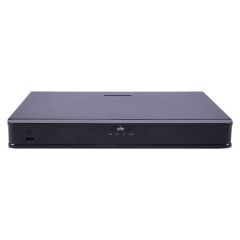
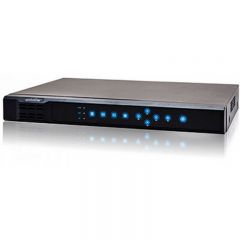


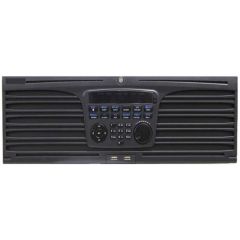


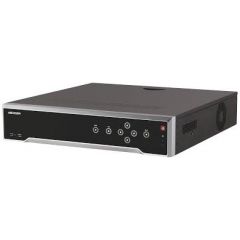


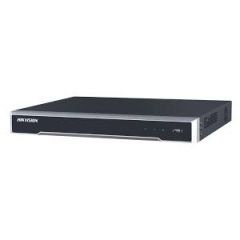
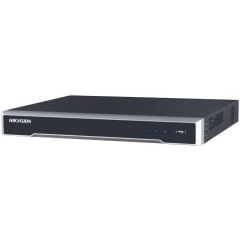

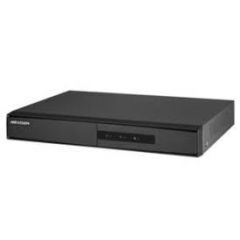


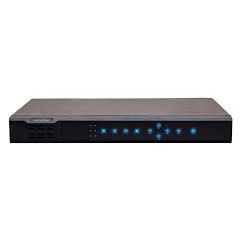
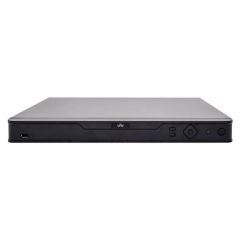
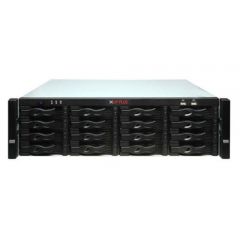


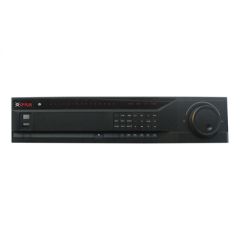
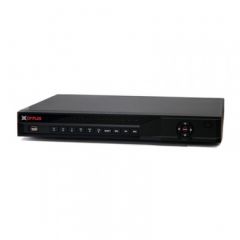




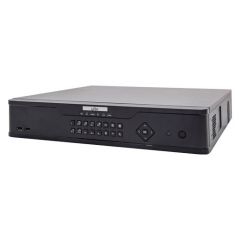
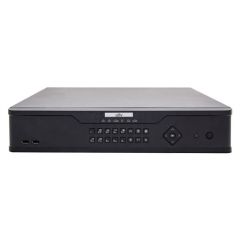
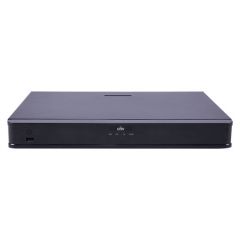

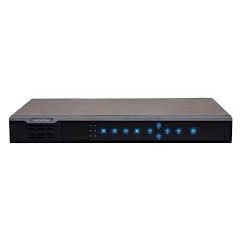


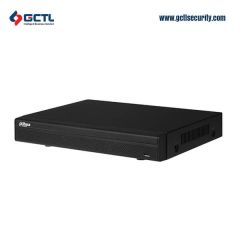
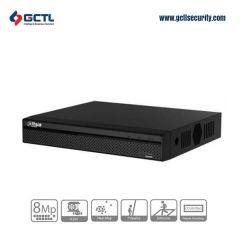


Network Video Recorder (NVR) – 4, 8, 16, 32 & 64 Channel Recorders
A Network Video Recorder (NVR) is a recording device designed to receive, manage and store digital video streams from IP cameras over a network. Footage is normally stored on one or more internal surveillance hard drives.
A typical recording path is:
IP Camera → Network or PoE Connection → NVR → Surveillance HDD → Live View and Playback
Unlike a DVR, an NVR does not normally process direct analog camera signals. It is built primarily for network-based surveillance. A reliable NVR should be selected together with compatible IP Camera solutions, surveillance HDDs, PoE switches, network infrastructure and a suitable backup-period plan. GCTL Security can support individual recorder purchases as well as complete CCTV system design, installation and remote-viewing setup.
Latest NVR Price in Bangladesh
The latest Network Video Recorder Price in Bangladesh starts from approximately ৳4,500 for selected entry-level models. Mid-range 8, 16 and 32-channel recorders cost more depending on resolution, bandwidth, HDD support, PoE ports and smart features. Enterprise NVRs with 64 or 128 channels, multiple HDD bays, RAID and high incoming bandwidth are generally quotation-based.
NVR Price depends on channel capacity, supported IP camera resolution, incoming bandwidth, decoding performance, built-in PoE ports, HDD bays, storage capacity, compression technology, AI recording features, brand and installation requirements. A basic 4-channel recorder for a small property costs significantly less than a multi-HDD enterprise NVR designed for a factory, shopping mall or central monitoring room.
The following price ranges are indicative planning figures. Final prices depend on the exact model, stock availability, warranty, storage configuration and project requirements.
| NVR type or capacity | Indicative price range in Bangladesh | Common application |
|---|---|---|
| 4 Channel NVR | ৳4,500–৳10,000 | Home, small office and shop |
| 8 Channel NVR | ৳7,500–৳18,000 | Apartment, retail shop and clinic |
| 16 Channel NVR | ৳14,000–৳35,000 | Office, school and warehouse |
| 32 Channel NVR | ৳28,000–৳75,000 | Factory, hospital and commercial building |
| 64 Channel NVR | ৳65,000–৳1,80,000 | Large factory and enterprise surveillance |
| 128 Channel NVR | ৳1,50,000–৳6,00,000+ | Command centre and large multi-camera project |
| PoE NVR | ৳12,000–৳1,20,000+ | Plug-and-play IP camera installation |
| RAID or High-Bandwidth NVR | ৳2,50,000–৳12,00,000+ | Critical enterprise recording |
NVR Price by Channel Capacity and Features
Channel capacity is only the first factor affecting NVR price. Two 16-channel recorders can have significantly different prices because one may support a single HDD and basic recording, while another may include PoE ports, dual SATA bays, 12MP camera support and AI analytics.
| Price factor | Why it affects NVR cost |
|---|---|
| Channel capacity | Determines the maximum number of supported IP cameras |
| Camera resolution | Higher-resolution streams require stronger processing and bandwidth |
| Incoming bandwidth | Limits the total amount of camera data the NVR can receive |
| Decoding capacity | Determines how many high-resolution streams can be viewed or played simultaneously |
| Built-in PoE | Adds camera power and direct network ports |
| HDD bays | More SATA interfaces allow greater storage capacity |
| RAID support | Provides storage redundancy for selected enterprise systems |
| AI analytics | May add face search, human/vehicle classification or perimeter events |
| Video outputs | Multiple HDMI, VGA or independent displays may increase cost |
| Network interfaces | Dual LAN, fibre or high-speed networking supports larger deployments |
| Brand and warranty | Product range, firmware, service and warranty vary by supplier |
| Installation | Storage planning, networking and configuration affect total project cost |
Buyers should compare the complete specification rather than choosing an NVR only by channel number or the lowest advertised price.
NVR Price With HDD vs Without HDD
Most NVR product prices are advertised without a hard drive unless the listing clearly states otherwise. The recorder may turn on and display live video without an HDD, but it cannot provide normal continuous recording and playback until suitable storage is installed.
NVR without HDD
An NVR without HDD normally includes:
- Recorder hardware
- Power adapter or internal power supply
- Mouse
- Basic accessories
- Firmware and local interface
- Manufacturer-supported network functions
The surveillance HDD must be purchased separately.
NVR with HDD
An NVR with HDD package may include:
- Network Video Recorder
- One or more surveillance hard drives
- HDD installation
- Storage initialization
- Recording schedule
- Retention-period configuration
- Playback testing
Complete IP camera system price
A complete NVR system can also include:
- IP cameras
- PoE NVR or PoE switches
- Cat6 network cable
- Surveillance HDD
- Monitor
- UPS
- Network accessories
- Installation
- Mobile-view configuration
- Testing and operator training
For this reason, NVR with HDD Price in Bangladesh and complete IP camera system price should always be presented separately from recorder-only pricing.
How an NVR Works with IP Cameras
An IP camera captures and processes video before transmitting the digital stream through Ethernet, fibre or a wireless network. The NVR receives the stream, authenticates the camera and stores the footage according to the configured schedule.
Step 1: Camera connection
The IP camera connects through:
- Built-in NVR PoE port
- External PoE switch
- Standard network switch
- Fibre-connected network
- Selected wireless bridge or WiFi network
Step 2: Camera registration
The camera is added using its IP address, password and compatible protocol.
Step 3: Stream configuration
The installer configures:
- Resolution
- Frame rate
- Bitrate
- Main stream
- Sub-stream
- Compression format
- Recording schedule
Step 4: Video storage
The NVR writes footage to the installed HDD according to continuous, motion, event or scheduled recording rules.
Step 5: Live view and playback
Users can view cameras through a monitor, browser, computer software or mobile application, depending on the supported platform.
NVR vs DVR
Choosing between an NVR and a DVR depends mainly on the type of cameras being used.
| Comparison factor | NVR | DVR or XVR |
|---|---|---|
| Camera type | IP cameras | Analog HD cameras |
| Video connection | Ethernet, PoE or network | Coaxial cable |
| Recorder input | Digital network stream | Analog video signal |
| Common resolution | Full HD, 4MP, 5MP, 8MP, 4K and higher model-dependent resolutions | Full HD, 3K, 5MP and selected higher formats |
| Power arrangement | PoE or separate power | Normally separate camera power |
| Scalability | Suitable for distributed network systems | Practical for conventional analog systems |
| Smart analytics | Camera-based, recorder-based or server-based | Depends on XVR and camera support |
| Recommended use | Modern network surveillance | Budget or existing coaxial installations |
Choose an NVR for an IP camera project. For analog AHD, TVI, CVI or CVBS cameras, explore a Digital Video Recorder or compatible XVR.
Main Types of NVR
4 Channel NVR
A 4-channel NVR supports up to four IP cameras. It is suitable for small properties where camera expansion is unlikely.
Recommended applications
- Small home
- Apartment unit
- Small shop
- Reception desk
- Personal office
- Small clinic
A 4-channel recorder may be affordable, but it provides no spare channel after four cameras are installed. Buyers planning future expansion may prefer an 8-channel model.
8 Channel NVR
An 8-channel NVR is a practical choice for small and medium surveillance systems. It provides enough capacity for several indoor and outdoor cameras while leaving room for future additions.
Recommended applications
- Retail shop
- Apartment building
- Restaurant
- Clinic
- Small office
- Small warehouse
- Residential property
An 8-channel NVR with one or two HDD bays can provide a balanced combination of price, storage and expansion.
16 Channel NVR
A 16-channel NVR is suitable for offices, schools, warehouses, showrooms, restaurants and medium-sized commercial buildings.
Important features to compare include:
- Incoming bandwidth
- Supported camera resolution
- Number of SATA bays
- PoE port count
- AI analytics channels
- Decoding performance
- HDMI output resolution
When a project initially requires 10–12 cameras, a 16-channel NVR usually provides useful expansion space.
32 Channel NVR
A 32-channel NVR is designed for larger commercial and institutional projects where many cameras must be recorded centrally.
Common applications
- Factory
- Hospital
- School campus
- Shopping mall
- Warehouse complex
- Commercial building
- Garments facility
- Industrial site
A 32-channel system requires proper network design, bandwidth calculation and storage planning. Channel count alone does not guarantee that the recorder can handle every camera at maximum resolution and bitrate.
64 and 128 Channel Enterprise NVR
Enterprise NVRs support large surveillance systems, central monitoring rooms and multi-building projects.
They may include:
- 64, 80 or 128 camera channels
- Multiple SATA bays
- RAID storage
- Dual network interfaces
- High incoming bandwidth
- Redundant power options on selected models
- Independent video outputs
- Central management integration
- Alarm inputs and outputs
- Enterprise user permissions
These systems are suitable for airports, banks, factories, campuses, shopping centres, logistics hubs and large industrial facilities.
PoE NVR
A PoE NVR includes built-in Power over Ethernet ports. Compatible IP cameras can receive power and transmit data through the same network cable.
PoE NVRs are convenient for smaller and medium-sized installations because they reduce the need for a separate PoE switch.
AI NVR
An AI NVR can perform or manage selected analytics such as:
- Human and vehicle classification
- Perimeter protection
- Intrusion detection
- Face search
- Smart motion detection
- Metadata search
- People counting
- Number plate event management
The number of AI-supported channels may be lower than the total recording channels. Buyers should confirm whether analytics are processed by the camera, recorder or both.
RAID and High-Availability NVR
A RAID-supported NVR uses multiple HDDs to provide selected performance or redundancy options.
Common RAID configurations may include:
- RAID 0 for combined performance without redundancy
- RAID 1 for mirrored storage
- RAID 5 for distributed parity
- RAID 6 for additional parity protection
- RAID 10 for combined mirroring and striping
RAID does not replace external backup or system maintenance. It protects against selected disk failures according to the configured RAID level.
PoE NVR vs Non-PoE NVR
| Feature | PoE NVR | Non-PoE NVR |
|---|---|---|
| Camera ports | Built-in PoE ports | Cameras connect through external network switches |
| Camera power | Supplied by the NVR within its PoE budget | Supplied by a separate PoE switch or injector |
| Installation | Simple for small centralized systems | More flexible for distributed projects |
| Cable management | Cameras connect directly to the recorder | Cameras connect to network switches |
| Expansion | Limited by built-in PoE ports and power budget | Easier to expand through additional switches |
| Distance | Normal Ethernet distance limitations apply | Switches or fibre links can extend network design |
| Maintenance | Simple single-location troubleshooting | Better for larger structured networks |
| Best use | Home, shop, office and small commercial site | Factory, campus, warehouse and enterprise network |
Choose a PoE NVR when
- Cameras are located near the recorder
- The system is relatively small
- Simple plug-and-play installation is preferred
- Built-in PoE power is sufficient
- Centralized cabling is practical
Choose a non-PoE NVR with external switches when
- Cameras are distributed across several floors or buildings
- The project needs managed switches
- Fibre backbone links are required
- More PoE power is needed
- Future expansion is important
- Network redundancy or VLAN design is required
2MP, 4MP, 5MP, 8MP and 4K NVR Resolution Guide
An NVR must support the resolution and encoding format of the connected IP cameras.
| Camera resolution | Common use | NVR consideration |
|---|---|---|
| 2MP / 1080p | Home, shop and general office monitoring | Entry-level bandwidth and storage |
| 4MP | Office, school and commercial surveillance | More detail with moderate storage demand |
| 5MP | Warehouse, retail and important entrances | Confirm camera and recorder compatibility |
| 8MP / 4K | Detailed evidence and premium surveillance | Requires stronger bandwidth, decoding and storage |
| 12MP and higher | Specialist and enterprise applications | Model-specific support required |
Recording resolution
This is the maximum resolution the NVR can receive and store from a camera.
Display resolution
This refers to the HDMI or VGA output shown on the connected monitor.
Decoding resolution
This determines how many camera streams the NVR can display or play simultaneously at a particular resolution.
A recorder may support an 8MP camera for recording but may not decode every connected camera at 8MP simultaneously.
NVR Bandwidth and Decoding Capacity Explained
Bandwidth and decoding are among the most important NVR specifications.
Incoming bandwidth
Incoming bandwidth is the total amount of camera data the NVR can receive.
For example, the total bandwidth depends on:
- Number of cameras
- Camera resolution
- Frame rate
- Bitrate
- Compression
- Main and secondary streams
- Audio transmission
Adding camera bitrates together provides an approximate incoming-bandwidth requirement. Some spare capacity should be retained for stable operation and future expansion.
Outgoing bandwidth
Outgoing bandwidth affects remote viewing, computer clients, mobile users and data transmitted from the recorder.
Decoding capacity
Decoding determines how many live or recorded streams can be displayed simultaneously at selected resolutions.
A buyer should confirm:
- Number of channels at 1080p
- Number of channels at 4MP
- Number of channels at 8MP
- Synchronous playback capacity
- Main and sub-stream behaviour
Current competitor listings increasingly display incoming bandwidth and decoding details alongside product price, showing their importance in NVR comparison.
NVR HDD, Storage Capacity and Recording-Time Guide
NVR storage duration depends on several variables:
- Number of cameras
- Resolution
- Frame rate
- Bitrate
- H.264 or H.265 compression
- Continuous or event recording
- Audio recording
- Required retention period
- HDD capacity
- RAID configuration
Common HDD configurations
| NVR size | Common HDD arrangement | Typical project type |
|---|---|---|
| 4 or 8 Channel | 1 SATA bay | Home and small shop |
| 8 or 16 Channel | 1–2 SATA bays | Office and medium business |
| 16 or 32 Channel | 2–4 SATA bays | Warehouse and commercial building |
| 32 or 64 Channel | 4–8 SATA bays | Factory and large institution |
| Enterprise NVR | 8–24 SATA bays or external storage | Command centre and long-retention system |
Recording-time planning
Exact recording duration cannot be determined from HDD size alone. The installer should calculate storage using the selected camera bitrate and recording policy.
For example:
- Four 2MP cameras require less storage than four 8MP cameras.
- Continuous recording uses more space than event-based recording.
- Higher frame rates increase storage consumption.
- Audio adds additional data.
- RAID reduces usable capacity depending on the selected level.
Surveillance-grade HDDs are recommended for continuous recording environments because they are designed for sustained video workloads.
H.265, H.265+ and Smart Video Compression
Video compression reduces the amount of data required for recording and network transmission.
Common formats include:
- H.264
- H.264+
- H.265
- H.265+
- Smart H.265+
Newer compression formats can reduce bandwidth and storage requirements compared with older formats when both the camera and NVR support the same codec.
Compression efficiency depends on:
- Scene movement
- Image noise
- Lighting changes
- Camera settings
- Manufacturer implementation
- Recording quality
- Bitrate mode
Compatibility should be confirmed before enabling a manufacturer-specific enhanced compression format.
ONVIF and Multi-Brand IP Camera Compatibility
ONVIF support can allow an NVR to connect with compatible IP cameras from another brand. However, basic video compatibility does not guarantee that every advanced function will work.
Cross-brand limitations may affect:
- Smart analytics
- Two-way audio
- Alarm inputs and outputs
- Metadata
- Face recognition
- ANPR events
- Advanced motion settings
- Firmware management
- Camera health reporting
For the most reliable operation, verify the exact NVR and camera combination before purchase. A site test is recommended for large or mixed-brand projects.
Best NVR for Home, Shop, Office, Factory and Enterprise
NVR for Home and Apartment
A 4 or 8-channel NVR is generally suitable for homes and small apartment installations.
Recommended features include:
- H.265 compression
- Mobile viewing
- One HDD bay
- 4MP or 8MP camera support
- Simple user management
- Optional built-in PoE
Choose an 8-channel model when future expansion is likely.
NVR for Shop and Small Business
A shop commonly needs cameras at the entrance, cash counter, sales area and stock room.
An 8-channel NVR provides flexibility for:
- Indoor dome cameras
- Outdoor bullet cameras
- Audio cameras
- Cash-counter monitoring
- Mobile viewing
- Event playback
NVR for Office and Commercial Building
A 16 or 32-channel recorder is suitable for reception areas, entrances, corridors, server rooms, parking zones and restricted departments.
The NVR can complement an Access Control and Time Attendance System by providing video evidence for entry events.
NVR for Factory and Warehouse
Factories and warehouses usually require higher channel capacity, more HDD bays and stronger bandwidth.
Recommended considerations include:
- 16, 32 or 64 channels
- Multiple HDD bays
- RAID for critical applications
- Dual LAN on selected models
- AI human and vehicle events
- Long retention periods
- Central monitoring
- UPS and network protection
NVR for Enterprise and Multi-Site Monitoring
Large organizations may use enterprise NVRs, recording servers or a hybrid architecture.
A multi-site solution may include:
- Local NVRs at each location
- Central VMS
- Health monitoring
- Central user management
- Alarm dashboards
- Redundant storage
- Fibre network
- Command-centre displays
The design should consider both local recording resilience and central monitoring requirements.
Popular NVR Brands in Bangladesh
GCTL Security supplies or supports selected NVR solutions from Hikvision, Dahua, Uniview, CP Plus, Avtech and VARITO.
Hikvision NVR
Hikvision offers entry-level, PoE, AcuSense, multi-HDD and enterprise NVR ranges.
Compare:
- Channel count
- Incoming bandwidth
- Decoding capacity
- SATA interfaces
- PoE ports
- AcuSense or smart-search functions
- Maximum camera resolution
- Mobile and VMS compatibility
Dahua NVR
Dahua NVR models include compact recorders, PoE systems, WizSense units and enterprise multi-HDD products.
Important considerations include:
- Supported camera resolution
- Smart H.265+ compression
- Incoming and outgoing bandwidth
- AI-by-recorder channels
- SATA bays
- PoE power budget
- Software compatibility
Uniview NVR
Uniview offers compact, PoE, 4K and enterprise NVR solutions for different system sizes.
Buyers should review:
- Camera-channel capacity
- Supported resolution
- Recording bandwidth
- HDD configuration
- RAID support
- ONVIF compatibility
- Remote monitoring functions
CP Plus, Avtech and VARITO NVR
CP Plus, Avtech and VARITO provide additional NVR options for residential, commercial and project-based surveillance.
Product selection should be based on camera compatibility, storage, bandwidth, after-sales support and project requirements rather than the brand name alone.
AI Analytics, Face Recognition and Smart Event Recording
An AI NVR can provide analytics through the recorder or manage events generated by AI-enabled cameras.
Possible functions include:
- Human and vehicle classification
- Perimeter intrusion
- Line crossing
- Face detection
- Face search
- Smart motion detection
- People counting
- Metadata search
- Vehicle event management
- Alarm-based recording
For advanced analytics, GCTL also provides Artificial Intelligence Camera solutions and Intelligent Video Analytics.
AI by camera vs AI by recorder
AI by camera means the IP camera processes the analytics and sends the event to the NVR.
AI by recorder means the NVR analyses selected normal camera streams using its own processing capacity.
The number of AI channels may be lower than the number of recording channels. This should be confirmed before purchasing.
ANPR recording
For licence-plate recognition, the NVR must support the relevant camera events, metadata and search functions. A dedicated ANPR Number Plate Camera and compatible software may be required.
NVR Mobile Viewing and Remote Monitoring
Most modern NVRs support remote viewing through a mobile application, computer client or browser, depending on the model.
Local recording without internet
An NVR can normally record locally on the internal HDD without an internet connection. The cameras and recorder must still be connected through the local network.
Internet-based remote access
Internet is generally required for:
- Viewing cameras from outside the site
- Push notifications
- Cloud or P2P access
- Remote playback
- Remote configuration
- Multi-site monitoring
Security recommendations
- Change all default passwords
- Use strong unique credentials
- Create separate user accounts
- Limit administrator access
- Update firmware carefully
- Disable unused services
- Protect the network router
- Restrict remote permissions
- Review login logs
Remote access should be configured by an authorized technician rather than exposing recorder ports unnecessarily.
NVR Installation in Bangladesh
Professional NVR Installation in Bangladesh includes recorder setup, HDD installation, camera registration, storage planning, remote access and system testing.
Site and system assessment
The installer should confirm:
- Number of cameras
- Camera resolution
- Current and future channel requirements
- Network design
- PoE requirements
- Incoming bandwidth
- HDD retention target
- Monitor and control-room needs
- Remote users
- AI analytics requirements
HDD installation and storage setup
The HDD should be installed securely, initialized and tested. Recording schedules and overwrite settings must be configured according to the retention policy.
Camera registration
Each camera should be added with:
- Correct IP address
- Secure password
- Compatible protocol
- Main and sub-stream settings
- Accurate date and time
- Recording schedule
- Event configuration
Mobile and remote-view setup
Remote access may include:
- Mobile application
- P2P or cloud connection
- Desktop client
- User permissions
- Push alerts
- Remote playback testing
Testing and handover
The technician should test:
- Live view
- Continuous recording
- Event recording
- Playback
- Evidence export
- HDD status
- Network interruption
- Remote access
- User accounts
- Camera disconnection alerts
How to Choose the Best NVR
Use this checklist before buying an NVR:
- 1. Count the cameras required now.
- 2. Allow spare channels for future expansion.
- 3. Confirm every camera’s resolution and codec.
- 4. Calculate total incoming bandwidth.
- 5. Check simultaneous decoding and playback capacity.
- 6. Choose built-in PoE or an external PoE-switch design.
- 7. Determine the required recording days.
- 8. Calculate HDD capacity and SATA-bay requirements.
- 9. Review RAID requirements for critical systems.
- 10. Confirm ONVIF and camera compatibility.
- 11. Check AI analytics and supported channel limits.
- 12. Review mobile and VMS requirements.
- 13. Confirm HDMI, VGA and display requirements.
- 14. Plan user permissions and cybersecurity.
- 15. Include installation, configuration and support in the budget.
Why Choose GCTL Security for NVR in Bangladesh
GCTL Security supports small CCTV installations and large enterprise recording projects across Bangladesh.
Key service areas include:
- 4–128 channel NVR selection
- Hikvision, Dahua, Uniview, CP Plus, Avtech and VARITO solutions
- PoE and non-PoE system design
- HDD and retention calculation
- Multi-HDD and RAID configuration
- AI NVR and smart analytics
- IP camera compatibility checking
- Network and fibre planning
- Mobile and remote viewing
- Enterprise central monitoring
- Installation and commissioning
- Maintenance and technical support
Review relevant security and automation implementations through the Our Projects page.
Buy NVR in Bangladesh from GCTL Security
To buy the right NVR in Bangladesh, begin with camera quantity, resolution, bandwidth, storage days and future expansion rather than selecting only by the lowest price.
GCTL Security supplies professional Network Video Recorder solutions for homes, apartments, shops, offices, factories, warehouses, schools, hospitals, banks, shopping malls and commercial buildings. Buyers can choose from 4, 8, 16, 32, 64 and 128-channel recorders with PoE, 4K recording, AI analytics, multiple SATA bays and RAID storage.
For current stock, the latest NVR Price in Bangladesh, HDD configuration or a customized enterprise project quotation, use the Contact Us page.
Frequently Asked Questions About NVR
1. What is an NVR
An NVR is a Network Video Recorder that receives digital video streams from IP cameras, records them on surveillance hard drives and provides live view, playback and remote monitoring.
2. What is the NVR Price in Bangladesh
NVR Price in Bangladesh generally starts from around ৳4,500 for selected entry-level models. Price increases according to channel count, resolution, bandwidth, HDD bays, PoE, AI features and enterprise storage requirements.
3. Does an NVR include a hard drive
Not always. Many NVR prices are for the recorder without HDD. Check the product description or request an NVR with HDD package.
4. Which NVR is suitable for eight cameras
An 8-channel NVR can support eight cameras, but selecting a 16-channel model may be better when future expansion is expected.
5. What is a PoE NVR
A PoE NVR includes built-in Power over Ethernet ports that can supply power and network connectivity to compatible IP cameras through the same cable.
6. Can an NVR work without internet
Yes. An NVR can record locally without internet when cameras and recorder are connected through the local network. Internet is normally required for remote viewing and cloud-based functions.
7. Can I use different-brand IP cameras with one NVR
Often yes when the devices support compatible ONVIF profiles. Advanced analytics, audio and alarm functions may not work across every brand combination.
8. How much HDD storage does an NVR need
Storage depends on camera count, resolution, bitrate, frame rate, compression, recording schedule and required retention days.
9. What is the difference between recording and decoding capacity
Recording capacity determines which camera streams the NVR can store. Decoding capacity determines how many high-resolution streams it can display or play at the same time.
10. Is a 4K NVR required for an 8MP camera
The NVR must support the camera’s resolution and codec. Buyers should also check incoming bandwidth, decoding performance and display output rather than relying only on a 4K label.
11. Can an NVR provide AI analytics
Selected AI NVRs support human and vehicle classification, perimeter protection, face search and other analytics. Available functions and AI channel counts vary by model.
12. Does GCTL Security provide NVR installation
Yes. GCTL Security provides NVR supply, HDD installation, IP camera registration, network configuration, storage planning, mobile-view setup, testing and after-sales support in Bangladesh.