Smart Traffic Management System
An Intelligent Traffic Management System is not just about “smart signals.” It is a complete ecosystem that can collect traffic data, analyze it instantly, and support better decisions—such as adjusting signal timing dynamically, detecting incidents early, managing emergency vehicle priority, and even monitoring violations. Systems like this are widely discussed in smart-city initiatives and research, including approaches designed specifically for Dhaka’s complex, heterogeneous traffic environment.
A Smart Traffic Management System uses real-time data and automation to improve traffic flow and safety. Unlike conventional traffic control (which runs on a fixed schedule), smart systems can respond to actual road conditions using inputs such as:
-
Video feeds from roadside cameras
-
Vehicle detection sensors (radar/loop/AI video detection)
-
Traffic signal controllers and intersection coordination
-
Cloud/edge analytics and dashboards
-
Communication networks between intersections and a control room
Modern smart traffic management solutions commonly use video detection, adaptive signal control, and analytics to optimize flow and reduce congestion.
In Bangladesh, smart systems are especially valuable because traffic patterns can be unpredictable: mixed vehicle types, non-lane-based movement, frequent stopping, and high pedestrian activity. That’s why smart signaling research and pilots in Dhaka often focus on computer-vision-based detection and context-aware optimization.
What is an Intelligent Traffic Management System?
An Intelligent Traffic Management System (ITMS) is a centralized technology platform that monitors, controls, and optimizes traffic operations using real-time detection + automated control + analytics. Most full ITMS deployments include a control center (command room) and multiple “field devices” installed across roads and intersections.
A complete ITMS typically covers these functions:
-
Traffic Data Collection
Cameras and sensors count vehicles, measure speed, detect occupancy, and monitor lane movement.
-
Real-Time Analytics
Software processes incoming data to identify congestion trends, abnormal patterns, incidents, or violations.
-
Adaptive Traffic Signal Control (ATSC/ATCS)
Signals adjust green time based on actual demand rather than static timing plans. Adaptive control is a key component in many ITMS designs.
-
Incident Detection & Response
The system can alert operators about accidents, breakdowns, or unusual congestion so teams can respond faster.
-
Enforcement & Compliance (Optional)
Modules like ANPR (Automatic Number Plate Recognition) can support automated violation detection—speed, red-light, wrong-way, etc.
-
Reporting & Planning
Decision-makers get dashboards and reports to improve long-term planning (intersection upgrades, traffic police deployment, route improvements).
Key Components of an ITMS
1) Adaptive Traffic Signals (ATCS)
This is often the first step for cities: installing signal controllers that can:
-
Adjust cycle length dynamically
-
Coordinate multiple junctions for smoother corridor flow (green waves)
-
Prioritize special movement during peak hours
Adaptive signals are often described as a major improvement over fixed-time control because they respond to real-time conditions.
2) Traffic Surveillance Cameras
Cameras provide:
In some Dhaka-focused research, camera feeds (e.g., RTSP streams) plus edge devices and object detection are used to optimize signal timing under heterogeneous traffic.
3) Vehicle Detection Sensors
Depending on project needs and budget, you may use:
4) ANPR (Automatic Number Plate Recognition)
ANPR helps identify vehicles for:
-
Automated enforcement
-
Stolen vehicle alerts (if integrated)
-
Access control for restricted zones
-
Traffic analytics based on plate reads
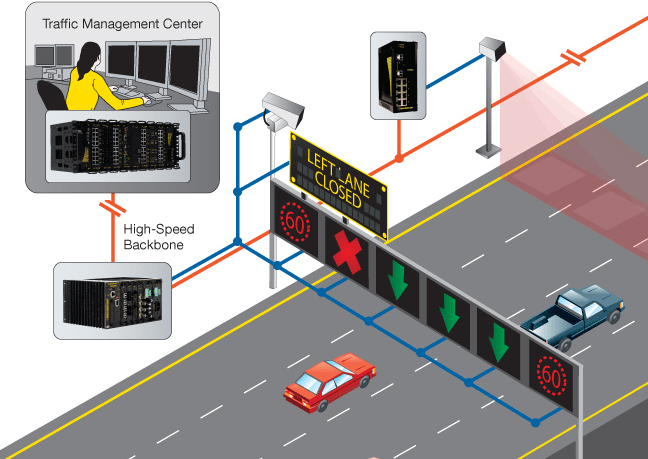
5) Variable Message Signs (VMS Boards)
Digital signboards can show:
-
Congestion warnings
-
Detour instructions
-
Accident alerts
-
Safety messages
6) Central Command & Control Center
The control room is the “brain”:
7) Networking & Power Infrastructure
Stable connectivity is crucial:
-
Fiber, wireless backhaul, or hybrid
-
UPS/power conditioning for field devices
-
Secure network segmentation
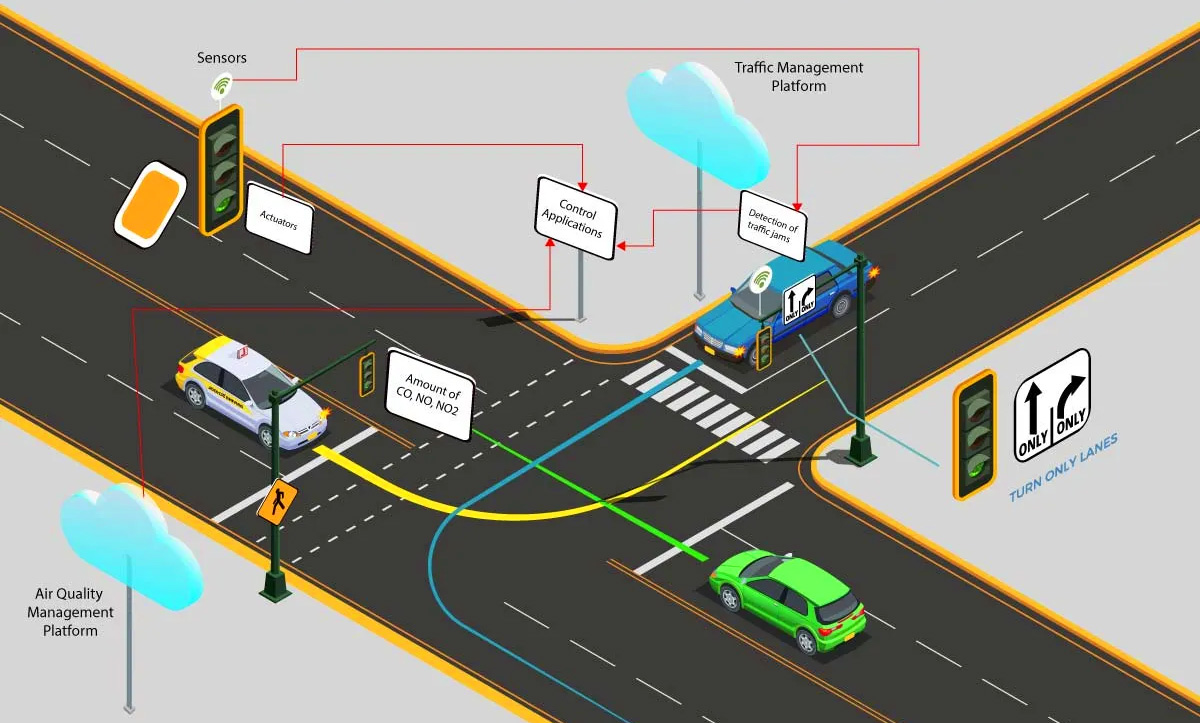
How ITMS Works: A Simple Workflow
-
Sensors/cameras capture traffic movement
-
System analyzes flow + detects events (congestion, queue length, violations, accidents)
-
Signal timings adjust automatically (adaptive control)
-
Operators receive alerts in the control room
-
Actions are taken (dispatch team, change signal plan, broadcast message, enforce)
-
Reports generated for planning and performance measurement
This real-time feedback loop is why intelligent systems can reduce congestion and improve response speed compared to manual-only control.
Where ITMS is Used in Bangladesh
A modern Intelligent Traffic Management System can be deployed for:
City Roads & Intersections
-
Adaptive signals at key junctions
-
Corridor synchronization to reduce stop-and-go traffic
-
Congestion analytics for planning
Airports, Ports and Industrial Zones
Expressways and Highways
Smart City & Public Safety Projects
Many smart-city projects combine traffic management with surveillance, public safety, and emergency response systems.
Benefits of Intelligent Traffic Management (Business + Government Value)
1) Reduced Congestion and Travel Time
Adaptive signals can reduce unnecessary waiting, improving flow at busy intersections.
2) Better Road Safety
Real-time monitoring helps detect risky behavior and enables quicker incident response.
3) Faster Emergency Response
Intelligent signals can support priority for emergency vehicles (when designed for it).
4) Data-Driven Planning
You can justify upgrades using real numbers:
-
Peak hour volumes
-
Queue length patterns
-
Corridor travel time
-
Violation hot spots
5) Transparent Operations & Accountability
Dashboards and logs improve transparency and performance management.
Challenges in Implementing ITMS in Bangladesh
1. Infrastructure Limitations
Many areas lack the necessary digital infrastructure for ITMS deployment.
2. High Initial Investment
Setting up ITMS requires significant investment in sensors, cameras, and software.
3. Data Privacy Concerns
Handling large volumes of traffic data raises privacy and security issues.
4. Public Awareness & Compliance
Drivers must be educated about ITMS to ensure successful implementation.
Despite these challenges, ITMS remains a crucial component of future smart city developments.
Smart Features That Make an ITMS “Intelligent”
Here are high-demand features buyers ask for:
-
Real-time vehicle count & classification (car, bus, truck, bike)
-
Queue length estimation
-
Adaptive green time allocation
-
Green wave / corridor coordination
-
Incident detection (stopped vehicle, collision suspicion)
-
Wrong-way / lane violation detection
-
Red-light violation detection (with evidence clips)
-
ANPR-based watchlists
-
Weather/visibility integration (optional)
-
Heatmaps and performance KPIs
-
Role-based access and audit logs for security
Choosing the Right ITMS Vendor in Bangladesh
When evaluating solutions, check these points:
-
Scalability: Can it grow from 10 junctions to 100?
-
Local support: Installation + maintenance capability in Bangladesh
-
Integration: Can it integrate with CCTV, access control, or city command centers?
-
Data & security: User permissions, audit logs, secure networking
-
Accuracy & reliability: Tested performance in local traffic conditions
-
Reporting: Useful dashboards for decision makers (not only live view)
Also ensure the solution is designed for the reality of Bangladesh traffic. Dhaka-specific studies often highlight the need for contextual approaches due to non-lane-based and heterogeneous traffic patterns.
Final Thought
An Intelligent Traffic Management System in Bangladesh is one of the most practical steps toward safer roads, smoother travel, and smarter city operations. By combining adaptive traffic signals, camera/sensor detection, analytics dashboards, and (optionally) ANPR-based enforcement, ITMS turns traffic control from a manual process into a data-driven system.
Traffic Management System FAQs
1) What is an Intelligent Traffic Management System (ITMS)?
ITMS is a smart solution that uses sensors, cameras, and software to monitor traffic and optimize signal timing, detect incidents, and support enforcement and reporting.
2) What is the difference between Smart Traffic Management and traditional traffic control?
Traditional traffic control uses fixed-time signals. Smart traffic systems use real-time data (video/sensors) to adjust signals and respond to congestion dynamically.
3) Can ITMS work in Bangladesh’s mixed and non-lane-based traffic?
Yes, but the system should be designed for local traffic behavior. Dhaka-focused research emphasizes context-aware detection and optimization for heterogeneous traffic.
4) Does ITMS require ANPR?
No. ANPR is optional. Many projects start with adaptive signals and monitoring first, then add ANPR and automated violation detection later.
5) What are the main components of ITMS?
Common components include adaptive signal controllers, cameras/sensors, networking, a central command center dashboard, incident alerts, and reporting tools.
6) How long does it take to implement an ITMS?
The timeline depends on project size. A small pilot can be deployed quickly, while city-wide projects require phased rollout, integration, and training.
7) What should I check before buying an ITMS solution?
Check scalability, detection accuracy, integration options, local support/SLA, dashboard/reporting quality, and cybersecurity features.