









Thermal Body Temperature Camera – Screening & Thermographic Solutions
A thermal body temperature camera is an infrared imaging system configured to estimate surface skin temperature, usually around a selected facial or forehead region. The system detects infrared energy emitted from the skin and converts the information into a thermal image and estimated temperature value.
Unlike a standard CCTV camera, a thermal camera does not depend entirely on visible light. However, not every thermal imaging camera is suitable for human temperature screening. Body-temperature applications require an appropriate measurement range, model-specific accuracy, correct installation and controlled environmental conditions.
Whether you need a portable camera for flexible screening or a complete fixed entrance solution, GCTL Security can help select the thermal camera, calibration equipment, monitoring software, network infrastructure and installation plan required for your site.
Latest Thermal Body Temperature Camera Price in Bangladesh
On average, Infrared Thermal Imaging Temperature Camera Price in Bangladesh starts from ৳45,000 and can go up to ৳12,00,000 or more, depending on thermal sensor resolution, measurement accuracy, technology, brand, screening distance, calibration method, storage system, smart features such as face detection or AI-based analytics, and installation requirements. Prices may also vary based on package configuration, warranty coverage, and local supplier services, including professional installation, system integration, and maintenance support.
These are not fixed retail prices, the final quotation depends on the exact model, current availability, installation environment, accuracy requirement, software licensing and integration scope.
| Thermal screening solution | Indicative planning range | Suitable application |
|---|---|---|
| Basic thermal screening device | ৳45,000–৳1,20,000 | Small office, reception or controlled entry |
| Portable handheld thermographic camera | ৳60,000–৳1,80,000 | Flexible or temporary screening |
| Fixed body-temperature screening camera | ৳1,80,000–৳4,50,000 | Factory, office, hospital or institutional entrance |
| Dual-spectrum thermal and visible camera | ৳2,80,000–৳6,50,000 | Screening with visible-image verification |
| Blackbody-ready high-accuracy system | ৳4,50,000–৳12,00,000+ | High-traffic controlled screening zone |
| Gate or turnstile-integrated screening system | ৳6,50,000–৳25,00,000+ | Factory gate, airport, terminal or secured building |
Body Temperature Camera Price by Type and Features
Two thermal cameras can have very different prices even when they appear similar. Buyers should compare the complete screening capability rather than focusing only on camera resolution.
| Price factor | Why it matters |
|---|---|
| Thermal resolution | Higher thermal resolution can provide more temperature detail and improve target separation |
| Stated accuracy | Screening-grade systems may offer different accuracy levels under specified conditions |
| Screening distance | Lens and calibration must match the distance between the camera and person |
| Single or multi-person use | Wider screening areas require more processing and careful setup |
| Dual-spectrum imaging | Thermal and visible sensors provide better verification and event records |
| Face filtering | Helps the system focus on human face or forehead regions |
| Blackbody support | A reference source may improve stability and model-specified accuracy |
| Alarm functions | Audible, visual and software alerts improve operator response |
| Software and reporting | Logging, dashboards and event records can increase system cost |
| Integration | NVR, access control, turnstile and entrance-security integration require additional equipment |
| Installation environment | Lighting, airflow, distance and ambient temperature affect screening performance |
A complete project quotation may also include mounting equipment, blackbody reference source, computer or server, monitor, network switch, NVR, UPS, software configuration and operator training.
Standalone Camera vs Complete Thermal Screening System Price
A standalone thermal camera is only one component of a professional screening workflow. It may measure surface skin temperature and generate an alarm, but it does not automatically include recording, reporting, entrance control or secondary verification equipment.
Standalone thermal camera may include
- Thermal sensor
- Visible-light camera
- Face or forehead targeting
- Temperature threshold alarm
- Local network connection
- Basic monitoring software
- Optional SD card storage
- PoE or DC power
Complete thermal screening system may include
- Fixed thermographic camera
- Visible-light verification camera
- Blackbody calibration source
- Monitoring workstation
- NVR or server storage
- Screening and reporting software
- Audible and visual alarms
- Access-control integration
- Turnstile or entrance-gate control
- UPS and network equipment
- Installation and system calibration
- Operator training
This distinction is important when comparing the Thermal Screening System Price in Bangladesh. A camera-only price cannot be compared directly with the cost of a fully integrated entrance solution.
How a Thermographic Temperature Screening Camera Works
A thermographic screening system combines infrared sensing, image processing, temperature estimation and alarm rules.
Step 1: Person enters the screening zone
The individual approaches a controlled measurement area at the recommended distance.
Step 2: Face or target area is detected
The camera or associated analytics identifies an appropriate facial or forehead region while attempting to ignore unrelated heat sources.
Step 3: Infrared energy is measured
The thermal sensor captures heat patterns emitted from the skin surface.
Step 4: Temperature value is estimated
The device applies its calibration and compensation algorithm to estimate a surface-temperature reading.
Step 5: Reading is compared with the threshold
If the estimated value exceeds the configured screening threshold, the system generates an alert.
Step 6: Secondary verification is performed
Security or healthcare personnel follow the organization’s approved procedure and verify the result with an appropriate clinical thermometer or other approved method.
Thermal screening supports preliminary assessment; it should not be treated as a stand-alone medical diagnosis.
Body Temperature Camera vs Industrial Thermal Imaging Camera
Body-temperature and industrial thermal cameras both use infrared technology, but they are designed for different measurement ranges and purposes.
| Comparison factor | Body-temperature screening camera | Industrial thermal imaging camera |
|---|---|---|
| Main purpose | Preliminary human skin-temperature screening | Inspection of machinery, electrical systems and building components |
| Temperature range | Narrow range focused around human skin temperature | Often covers a much wider temperature range |
| Target | Face, forehead or selected skin region | Equipment, surfaces and building materials |
| Accuracy focus | Human screening under controlled conditions | Industrial temperature patterns and hot spots |
| Environment | Controlled indoor screening zone | Factory, field, electrical room or maintenance site |
| Software | Screening alarms and person-related events | Industrial measurement and inspection reports |
| Suitable replacement | Cannot replace an industrial inspection camera | Cannot automatically replace a screening-grade body-temperature system |
Industrial thermal cameras should not be presented as body-temperature screening products unless the manufacturer specifically supports that application.
Thermal Camera vs Infrared Thermometer
Both devices provide contactless measurements, but their workflows are different.
| Factor | Thermal screening camera | Infrared forehead thermometer |
|---|---|---|
| Measurement method | Thermal image and selected face region | Single-point measurement |
| Screening flow | Can support continuous or multi-person workflows | Usually checks one person at a time |
| Operator requirement | Can be monitored centrally | Normally requires an operator |
| Recording | May store images, alarms and events | Usually limited or unavailable |
| Integration | Can connect with NVR, software or entrance systems | Generally used as a standalone device |
| Best use | Controlled high-traffic entrances | Individual confirmation or small entry point |
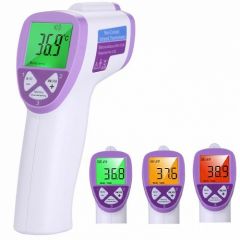
A handheld thermometer may be suitable for low-volume checking or secondary verification. A fixed thermal camera is more suitable where an organization needs an organized entrance workflow, centralized monitoring or event records.
Main Types of Body Temperature Screening Camera
Fixed Thermographic Camera
A fixed thermographic camera is installed at a controlled entrance and continuously monitors a defined screening zone. It is suitable for factories, hospitals, offices, airports, terminals and institutional entrances.
Common features may include:
- Face or forehead targeting
- Thermal and visible images
- High-temperature alarm
- Network monitoring
- Event snapshots
- NVR or server integration
- Blackbody compatibility
- Multi-person screening support
Fixed systems provide a repeatable measurement position but depend heavily on correct camera height, distance, angle and environmental control.
Handheld Thermal Screening Camera
A handheld thermal camera provides portable screening for temporary entrances, mobile inspection teams and locations where a fixed installation is not practical.
A professional handheld device may support:
- Thermal display
- Visible image
- Adjustable alarm threshold
- SD card storage
- Battery operation
- PC software
- Image and event review
Handheld screening usually requires a trained operator and consistent measuring distance.
Dual-Spectrum Thermal and Optical Camera
A dual-spectrum camera combines a thermal sensor with a conventional visible-light sensor. The thermal channel estimates skin temperature while the optical image helps operators verify the person and location associated with the event.
This type is useful where organizations need:
- Thermal and visible comparison
- Better operator verification
- Event snapshots
- Security recording
- Face-targeted screening
- Central monitoring
Blackbody-Calibrated Thermal Camera
A blackbody is a stable thermal reference source placed within the camera’s field of view. Compatible screening systems use this reference to help maintain model-specified measurement stability.
Selected Hikvision screening solutions specify approximately ±0.5°C accuracy without a blackbody and approximately ±0.3°C with a properly configured blackbody. These values are model-specific and depend on installation and operating conditions; they should not be applied to every thermal camera.
Temperature Screening Gate and Metal Detector
An integrated screening gate combines security inspection with temperature screening. Depending on the model, the system may include:
- Walk-through metal detection
- Contactless temperature checking
- Alarm threshold
- Zone indication
- Person counting
- Entry logs
- Optional access-control integration
These systems are suitable for factories, government facilities, events and high-security entrances where multiple checks need to be coordinated.
Thermal Sensor Resolution, Accuracy and Measurement Range
Thermal sensor resolution is different from the megapixel resolution of a normal CCTV camera. It determines how many thermal measurement points are available within the image.
Thermal resolution
Higher resolution can help separate faces from surrounding heat sources, especially when several people appear in the image. However, resolution alone does not guarantee accurate screening.
Measurement range
Body-temperature screening cameras normally use a narrower measurement range than industrial thermal imagers. Selected professional systems are designed around an approximate 30°C–45°C screening range, but the exact specification varies by model.
Stated accuracy
Accuracy must always be presented with the manufacturer’s conditions. It may depend on:
- Ambient temperature
- Blackbody use
- Camera distance
- Target angle
- Face visibility
- Airflow
- Sunlight
- System warm-up
- Calibration
- Firmware and software configuration
Thermal sensitivity
Thermal sensitivity describes the camera’s ability to distinguish small temperature differences. Better sensitivity can improve thermal image detail, but it should be evaluated together with calibration and screening accuracy.
Blackbody Calibration and High-Accuracy Screening
A blackbody reference source maintains a known and stable temperature within the camera view. The screening camera compares the blackbody reference with the measured target to reduce drift and improve model-specified measurement stability.
When blackbody calibration is useful
A blackbody-assisted system may be suitable for:
- High-traffic factory entrances
- Hospitals and healthcare facilities
- Airports and terminals
- Government buildings
- Large corporate offices
- Screening points requiring tighter measurement control
Blackbody placement requirements
The reference source should be:
- Positioned within the recommended camera view
- Installed at the correct distance
- Allowed to warm up fully
- Protected from airflow and direct sunlight
- Kept visible and unobstructed
- Configured according to the camera manufacturer’s instructions
A blackbody does not automatically correct a poorly designed screening environment. Camera placement, lighting, airflow and operating procedures remain important.
Face Detection, Multi-Person Screening and Temperature Alarm
Face detection
Face-targeting analytics help the system focus on human facial regions instead of measuring unrelated objects such as hot drinks, lights or electronic equipment.
Multi-person screening
Some systems can monitor more than one person in a scene. Multi-person screening may improve throughput, but accuracy can be affected by crowding, overlapping faces and inconsistent distance. The FDA has warned that improper multi-person use may increase the risk of inaccurate readings.
Temperature-exception alarm
When a reading exceeds the configured threshold, the system may generate:
- Audible alarm
- On-screen warning
- Visual indicator
- Event snapshot
- Email or software notification
- Alarm output to another system
The threshold should be selected according to the organization’s approved screening procedure rather than treated as a medical diagnosis.
Indoor Environment, Distance and Installation Requirements
Reliable thermal screening requires a controlled measurement zone.
Stable indoor environment
The screening area should be indoors or suitably enclosed, with stable ambient conditions. Avoid:
- Direct sunlight
- Strong fans
- Air-conditioning airflow
- Open external doors
- Nearby heaters
- Reflective glass
- Hot machinery
- Rapid environmental changes
Acclimatization
People arriving from strong sunlight, rain, outdoor heat or air-conditioned vehicles may need a short adjustment period before screening. Skin temperature can be influenced by the surrounding environment.
Correct distance
The camera, target and blackbody must be positioned according to the selected model’s instructions. Too much distance can make the target area too small, while too little distance can reduce consistent framing.
Camera angle
The face should be clearly visible and reasonably aligned with the camera. Masks, hats, hair, glasses, movement and steep mounting angles may affect the target region available for measurement.
Controlled entry flow
Floor markings, barriers or guide rails can help keep individuals within the intended measurement zone.
Best Thermal Camera for Factory, Office, Hospital and Public Entrance
Thermal Camera for Factory and Garments Entrance
Factories and garments facilities may need fast screening during shift changes. A fixed dual-spectrum camera with automatic alarms is usually more practical than checking every worker manually.
A complete factory solution may include:
- Fixed thermal camera
- Blackbody reference
- Monitoring computer
- Network and UPS
- Audible alarm
- Entry queue control
- Event records
- Secondary verification point
Body Temperature Camera for Office
Corporate offices typically need an organized but unobtrusive solution for employees, visitors and contractors.
A compact fixed camera or controlled reception screening system may provide:
- Contactless screening
- Visual verification
- Temperature-exception alarm
- Visitor-event record
- Integration with an Access Control and Time Attendance System
Access decisions should not be automated solely from an unverified elevated reading.
Thermal Screening Camera for Hospital
Hospitals and clinics need carefully managed screening procedures and trained personnel. Thermal cameras may assist with preliminary entrance screening, but elevated results should be verified through an approved clinical process.
Recommended considerations include:
- Controlled indoor area
- Clear patient flow
- Secondary measurement station
- Restricted access to records
- Regular equipment checks
- Defined escalation procedure
Temperature Screening for Airport and Station
Airports, railway stations and transport terminals may require high-throughput screening at controlled checkpoints.
A project may include:
- Multi-person thermal cameras
- Blackbody calibration
- Central monitoring
- Operator workstations
- Alarm dashboards
- NVR recording
- Entrance-control procedures
Thermal Camera for School, University and Shopping Mall
Schools, universities and shopping malls may use fixed or portable systems depending on visitor volume and entrance layout.
The design should consider:
- Number of entrances
- Peak traffic periods
- Indoor environmental control
- Operator availability
- Secondary verification
- Data-retention policy
- Maintenance and technical support
Popular Thermal Body Temperature Camera Brands in Bangladesh
Hikvision Thermographic Camera
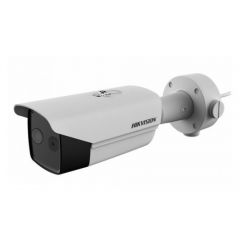
Hikvision offers thermographic bullet, turret and handheld screening cameras, together with selected blackbody and software solutions.
Before choosing a model, confirm:
- Thermal resolution
- Measurement range
- Stated accuracy
- Blackbody compatibility
- Screening distance
- Alarm support
- NVR and software compatibility
- Indoor operating requirements
Dahua Thermal Body Temperature Camera
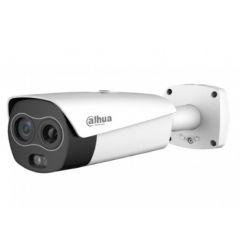
Dahua offers dual-spectrum thermal cameras and professional body-temperature screening solutions for fixed entrances and larger projects.
Check:
- Thermal and visible sensor resolution
- Lens and screening distance
- Accuracy conditions
- Blackbody requirement
- Face-detection capability
- Alarm outputs
- Storage and software compatibility
VARITO Temperature Screening Solutions
VARITO solutions include handheld thermal devices, non-contact thermometers and integrated entrance-screening equipment.
The right option should be selected according to:
- Portable or fixed use
- Required screening speed
- Security-integration requirement
- Indoor conditions
- Reporting and alarm needs
- Budget and maintenance support
NVR, Software, Display and Reporting Requirements
A professional thermal screening project may need additional hardware beyond the camera.
Network Video Recorder
A compatible Network Video Recorder can store visible or thermal video, alarm events and playback records where supported.
Confirm:
- Camera compatibility
- Recording channels
- Thermal event support
- Storage capacity
- Playback functions
- Remote monitoring
- User permissions
Monitoring software
Software may provide:
- Live thermal and visible views
- Temperature alerts
- Event snapshots
- Searchable records
- Threshold configuration
- User accounts
- Reporting
- Device health monitoring
Display and operator station
A dedicated monitor or workstation helps security personnel review alerts and perform secondary verification without interrupting normal entrance flow.
Data storage
Storage capacity depends on:
- Number of cameras
- Visible and thermal streams
- Resolution and bitrate
- Recording schedule
- Event-snapshot retention
- Required backup period
Thermal Camera with Access Control and Entrance Security Integration
Thermal screening can be coordinated with wider Entrance Security Solutions, including turnstiles, walk-through metal detectors and visitor-management procedures.
A typical workflow may be:
- 1. A person enters the controlled screening zone.
- 2. The thermal camera estimates surface skin temperature.
- 3. The system compares the value with the configured threshold.
- 4. A normal reading allows the standard entry process to continue.
- 5. An elevated reading generates an alert.
- 6. Staff perform secondary verification.
- 7. Access is approved or managed according to organizational policy.
The screening camera should not independently deny entry based solely on an unverified temperature estimate unless the organization has established a suitable review procedure.
Preliminary Screening and Medical Safety Guidelines
Thermal screening cameras estimate surface skin temperature. They do not directly measure core body temperature and do not diagnose fever, infection or any disease.
The FDA has warned that incorrect setup or inappropriate use can produce false-high or false-normal results. Thermal screening should therefore be part of a wider procedure that includes correct installation, trained operators and secondary confirmation.
Recommended safety wording
Thermal screening cameras are intended for preliminary elevated skin-temperature screening. They do not diagnose fever, infection or any medical condition. An elevated reading should be verified using an appropriate clinical thermometer and the organization’s approved procedure.
Avoid claims such as:
- Detects coronavirus
- Diagnoses infection
- Guarantees fever detection
- Provides clinical diagnosis
- Works accurately in every environment
Thermal Body Temperature Camera Installation in Bangladesh
Professional Thermal Body Temperature Camera Installation in Bangladesh includes more than mounting the camera.
Site survey
The installer should review:
- Entrance width
- Expected traffic volume
- Camera-to-person distance
- Available indoor space
- Ambient temperature
- Airflow and sunlight
- Blackbody location
- Network and power
- Monitoring position
- Secondary verification area
Camera and blackbody installation
The camera and blackbody should be positioned according to manufacturer guidance. Their field of view, distance and alignment should remain stable.
Software configuration
Configuration may include:
- Temperature threshold
- Face filtering
- Alarm type
- Recording schedule
- User accounts
- Data retention
- NVR integration
- Event reporting
Testing and commissioning
Testing should cover:
- System warm-up
- Camera and blackbody alignment
- Day-to-day environmental conditions
- Normal and exception alarms
- Face positioning
- Single and multi-person flow
- Recording and playback
- Network interruption
- Operator workflow
Training and handover
Operators should receive training on:
- Live monitoring
- Alarm handling
- Secondary verification
- Report review
- User management
- Basic troubleshooting
- Cleaning and maintenance
- Escalation procedures
How to Choose the Best Body Temperature Camera
Use the following checklist before purchasing:
- 1. Confirm that the product is intended for human body-temperature screening.
- 2. Decide whether you need handheld or fixed screening.
- 3. Calculate the number of entrances and expected traffic.
- 4. Check thermal resolution and measurement range.
- 5. Review the manufacturer’s stated accuracy conditions.
- 6. Determine whether blackbody calibration is required.
- 7. Measure the available camera distance.
- 8. Confirm indoor environmental control.
- 9. Decide whether visible-image verification is needed.
- 10. Review alarm, software and reporting features.
- 11. Confirm NVR and network compatibility.
- 12. Plan a secondary verification procedure.
- 13. Define user access and record-retention rules.
- 14. Include professional installation and testing in the budget.
- 15. Request a current model-specific quotation.
Why Choose GCTL Security for Thermal Camera in Bangladesh
GCTL Security supports both individual device purchases and complete thermal-screening projects.
Key services include:
- Thermal camera consultation
- Handheld and fixed screening solutions
- Hikvision, Dahua and VARITO options
- Dual-spectrum camera systems
- Blackbody-assisted screening
- Screening gate integration
- NVR and software setup
- Site survey and entrance planning
- Network and UPS design
- Installation and calibration
- Operator training
- Maintenance and after-sales support
You can review GCTL’s wider security and automation experience through the Our Projects page.
Buy Thermal Body Temperature Camera in Bangladesh from GCTL Security
To buy the right Thermal Body Temperature Camera in Bangladesh, begin with the entrance environment, screening volume and required accuracy rather than selecting only by camera price.
GCTL Security can provide:
1. Handheld thermal screening cameras. 2. Fixed thermographic cameras. 3. Dual-spectrum thermal cameras. 4. Blackbody calibration systems. 5. Infrared forehead thermometers. 6. Temperature-screening gates. 7. NVR and monitoring systems. 8. Entrance-security integration. 9. Complete installation and supportFor current product availability, the latest Thermal Body Temperature Camera Price in Bangladesh or a customized project proposal, contact GCTL Security.
Frequently Asked Questions About Thermal Body Temperature Camera
1. What is a thermal body temperature camera
A thermal body temperature camera is an infrared system configured to estimate surface skin temperature for preliminary screening at a controlled entrance.
2. What is the Thermal Body Temperature Camera Price in Bangladesh
The price depends on camera type, thermal resolution, stated accuracy, blackbody support, software, screening distance and installation. Handheld devices, fixed cameras and integrated screening systems should be compared separately.
3. Can a thermal camera diagnose fever
No. A thermal camera estimates surface skin temperature and cannot diagnose fever, infection or disease. An elevated reading should be confirmed using an appropriate clinical thermometer.
4. What is a blackbody in a thermal screening system
A blackbody is a stable temperature-reference source used by compatible cameras to improve model-specified measurement stability and accuracy under controlled conditions.
5. Is a blackbody always required
Not every screening application requires a blackbody. It is generally considered when tighter accuracy and stability are needed. The requirement depends on the selected model and project objective.
6. What is the difference between a thermal camera and an infrared thermometer
A thermal camera produces a thermal image and may support continuous or multi-person screening. An infrared thermometer normally measures one person or point at a time.
7. Can a thermal camera screen multiple people
Selected systems support multi-person screening, but performance can be affected by crowding, distance and overlapping faces. Controlled entry flow generally provides more consistent results.
8. Can the system work outdoors
Body-temperature screening normally performs best in a controlled indoor or enclosed environment. Direct sunlight, wind and changing ambient temperatures can affect readings.
9. Can thermal events be recorded
Compatible cameras can work with monitoring software, SD cards, NVRs or servers to store images, video and temperature-exception events.
10. Which thermal camera is suitable for a factory entrance
A fixed dual-spectrum camera with automated alarms and optional blackbody calibration is often suitable for high-volume factory entrances. The final choice should follow a site survey.
11. Can a thermal camera integrate with access control
Yes. Compatible systems can integrate with access control, turnstiles and entrance-management procedures. Elevated readings should still receive secondary verification before access decisions are finalized.
12. Does GCTL Security provide installation
Yes. GCTL Security provides site surveys, thermal camera supply, blackbody setup, NVR and software configuration, entrance integration, testing, operator training and after-sales support in Bangladesh.